ERV Filters in Boulder: How Often to Change Them for Clean Winter Air
Your ERV runs all winter, pulling in cold dry Boulder air and sending stale air out. The filters stand between that air and the core, and by February they are usually carrying months of dust. Here is how often to change them, which type your unit takes, and the signs a clogged filter is starving the system.
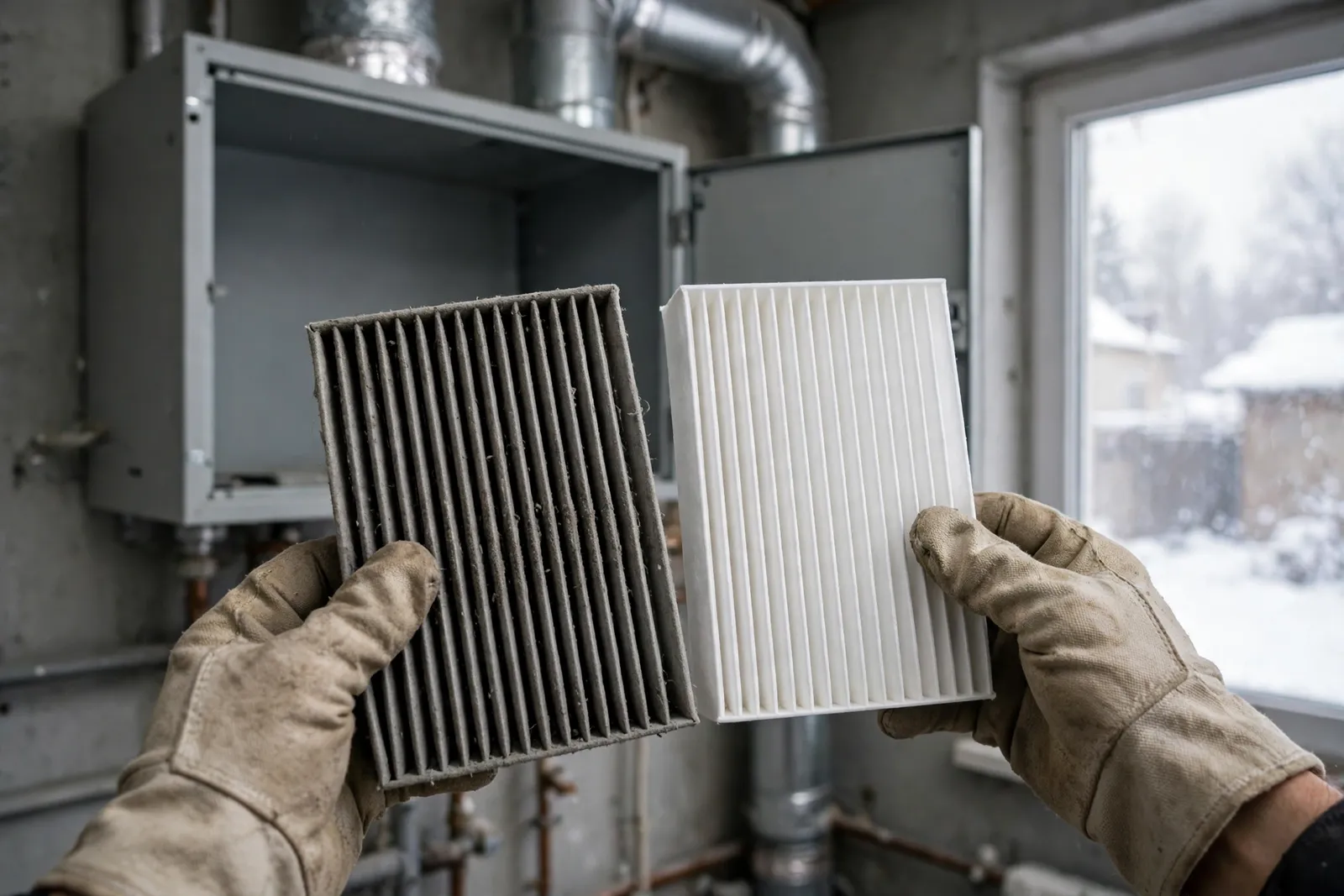
Most Boulder homeowners never think about their ERV filters until something feels off. The bedrooms smell stale in the morning, or the supply grille in the living room barely moves air. Nine times out of ten, the filter is the first place to look, and it is also the cheapest fix in the whole system.
Winter is the hard season for filters. The unit runs long hours, the air coming in is dry and dusty, and the house stays sealed up for months. This blog covers the filter types, how often to change them through a Boulder winter, and how to tell when a clogged filter is starving the system.
What an ERV Filter Actually Does
An ERV filter does two jobs at once. It keeps dust and grit out of the core, where buildup would block the narrow passages that move heat and moisture between the air streams. And it keeps that same dust out of your rooms, so the fresh air at the supply grilles is cleaner than the air outside.
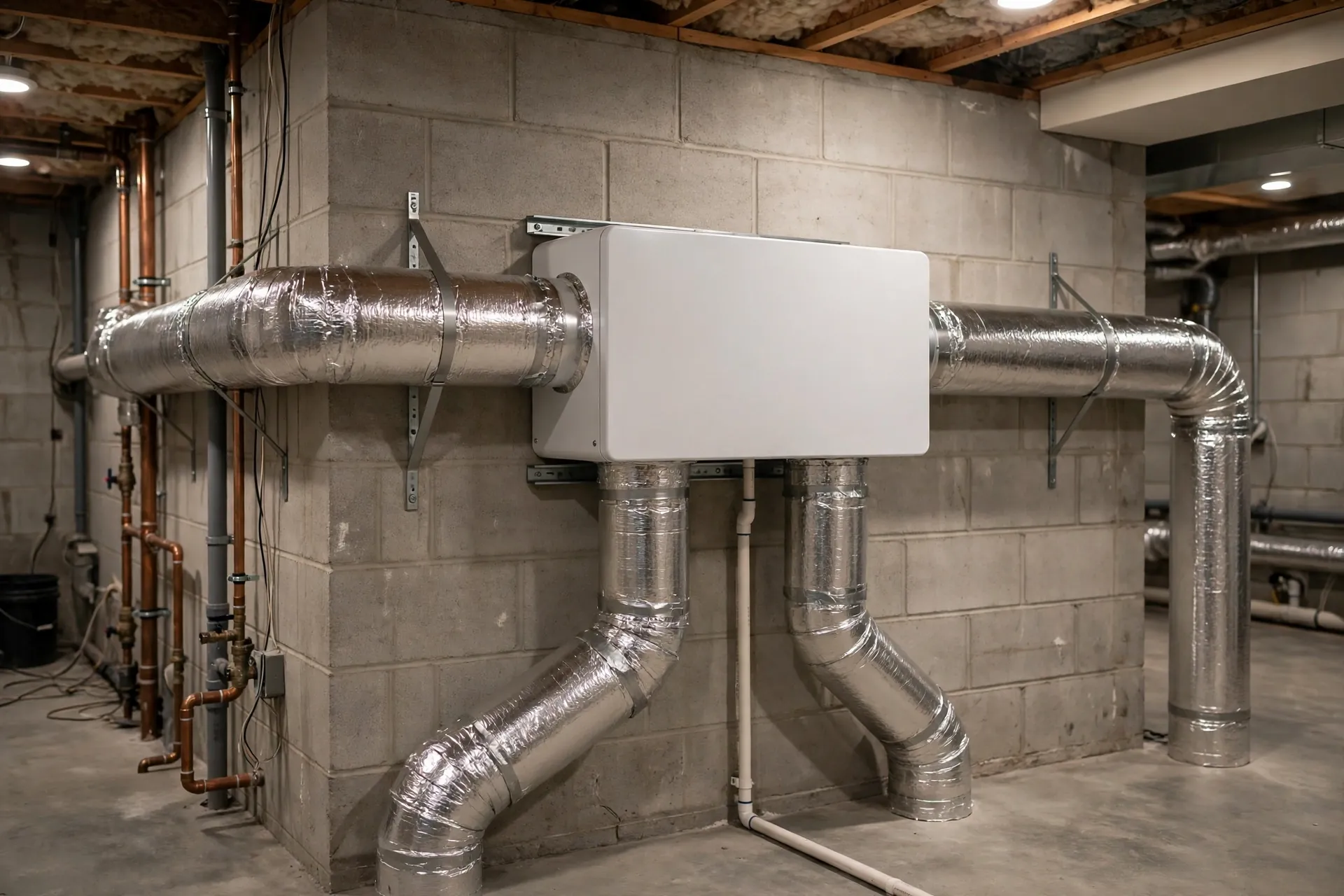
Most units carry at least two filters: one on the fresh air coming in, and one on the stale air going out. The supply side filter does the heavy work in winter. The exhaust side filter protects the core from household dust and pet hair. If you are new to the system, our ERV installation guide for Boulder homes shows where the unit and its filters sit.
The Filter Types You Will Find in a Boulder ERV
Open the panel and you will usually find one of three kinds. Flat foam filters are thin, washable pads that catch larger dust. They need rinsing often and they let fine dust through. Pleated filters are the common choice: folded media in a frame, with far more surface area packed into the same slot. They catch finer particles and hold more dust before airflow drops, which is why most Boulder units run them through winter.
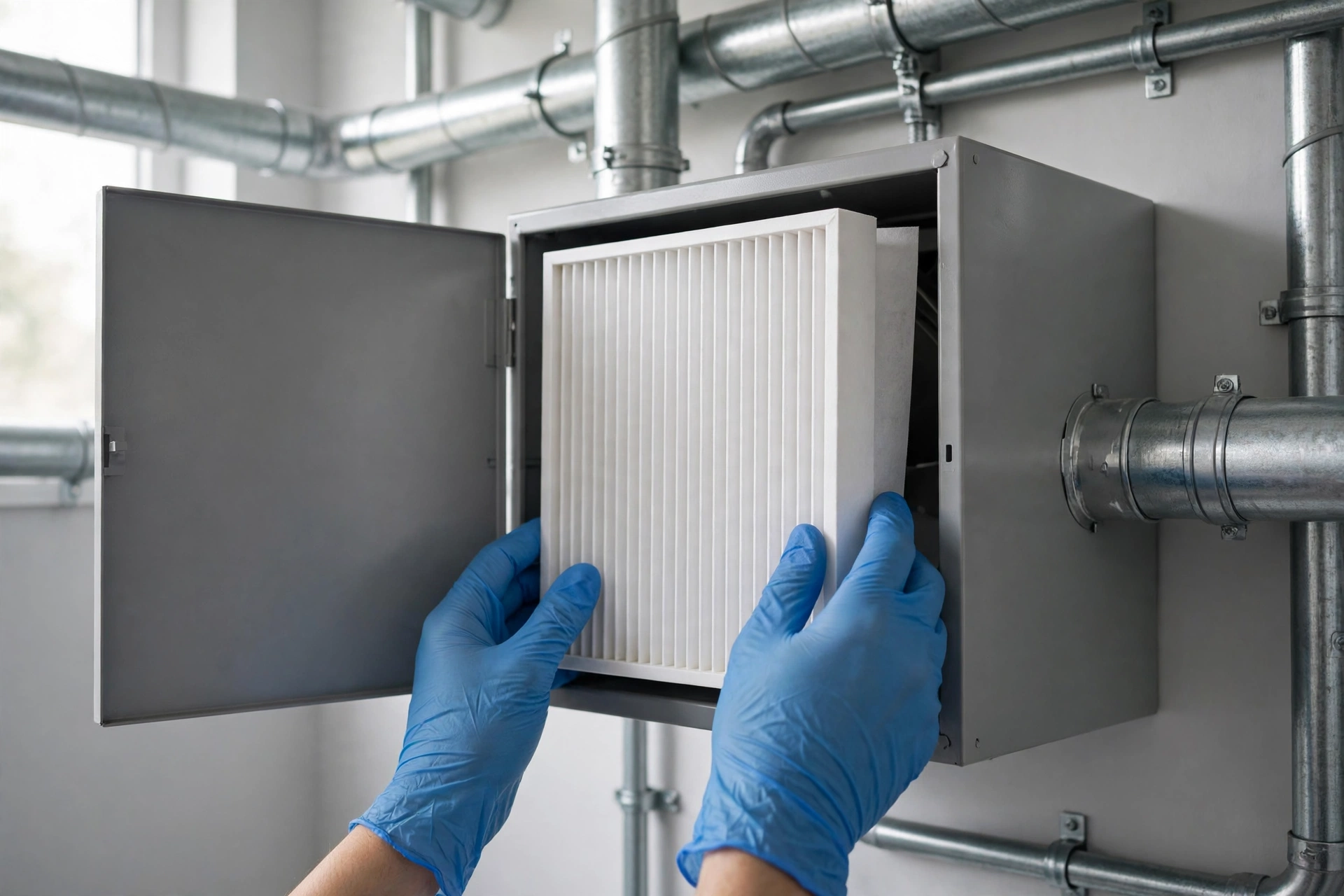
Carbon filters add a layer of activated carbon that takes the edge off cooking smells and wildfire smoke odor. They help with smells, not dust load, and need changing on schedule once the carbon saturates, even if they look clean. Whatever type your unit takes, use the size and rating in the manual. A filter that is close but not exact lets air slip around the edges, and unfiltered air goes straight to the core. Our post on ERVs and allergies in Boulder homes covers which filter choices help most when pollen season arrives.
How Often to Change ERV Filters in Winter
No single interval fits every Boulder home. A useful winter routine looks like this:
- Check every month, November to March. Pull the filters, hold each one up to a light, and look through it. If you can barely see light through the media, it is done.
- Change the supply filter every two to three months in winter. Homes near busy roads, construction, or open foothill land sit at the short end of that range.
- Change the exhaust filter every three to four months. It loads more slowly, but cooking and pets speed it up.
- Rinse washable pre-filters monthly. Let them dry fully before they go back in. A damp filter grows musty smells fast.
- Change all filters at the start of heating season. Starting November with fresh media means the unit faces the hardest months at full airflow.
Pets, wood burning, and renovation dust all shorten the interval. So does a wildfire smoke summer: ash residue keeps circulating into fall and loads the first winter filter early. Keep a spare set on the shelf so a monthly check never turns into a week of running on a clogged filter. The ERV filter maintenance guide covers the year round routine, and our ERV maintenance checklist for each season puts filter changes in context with the rest of the system.
Why Boulder Winter Loads Filters Faster
Boulder winter air is dry, and dry air carries dust further. The city sits at about 5,400 feet, where Front Range winds pick up grit from open ground and carry it for miles. Inside, the furnace runs long cycles, the house stays closed, and every cooked meal and every pet adds to the dust the exhaust filter has to catch.
Wood smoke adds a fine sticky layer that clogs media faster than plain dust. Soot particles lodge deep in pleated media, where a vacuum cannot reach them. Homes in the foothills see the worst of it, but even a tight new build in Superior or Louisville loads filters faster in January than in May. Checking the intake hood when you check the filters takes a minute and saves the supply filter real wear. For the bigger winter picture, see ERVs in Colorado winter cold.
Signs a Clogged Filter Is Starving the System
A clogged filter rarely announces itself. It shows up as a system that slowly stops doing its job:
- Weak airflow at the supply grilles. Hold a tissue near a grille. If it barely moves while the unit runs, airflow is restricted, and the filter is the usual suspect.
- Stale rooms in the morning. Bedrooms that smell stuffy after a night with the doors closed are not getting their share of fresh air.
- Humidity swings. A starved ERV moves less air, so it recycles less moisture. Rooms feel drier, and window condensation patterns change. Our post on window condensation and how an ERV helps explains what normal winter mist looks like.
- More noise, less air. Fans working against a clogged filter run louder and move less. A new hum from the unit often traces to the filter.
- Dust settling faster. When clogged media lets fine dust slip past, dust reaches rooms it used to miss.
- Long defrost pauses. Restricted airflow changes how the core handles frost on the coldest nights. If the unit pauses longer than it used to, check the filters first.
One clogged filter can mimic a failing fan or a blocked duct, which is why it is always the first check. If several rooms feel stuffy at once, those are familiar signs of poor ventilation in a Boulder home.
How to Check and Change a Filter
Changing an ERV filter is a homeowner job on most units, and it takes about ten minutes. Switch the unit off first, so the fans are still while the panel is open. Open the access panel and note how the filter sits: the airflow arrow on the frame points in the direction air travels, and the new filter must point the same way.
Slide the old filter out slowly and keep it level, so the dust on its face stays on the filter instead of falling into the unit. Hold it up to a light. A filter with a light grey tint and visible light through the media has life left. A filter that is dark, matted, or shows no light through it is done. Vacuum the filter slot, wipe the gasket with a dry cloth, and slide the new filter in with the arrow pointing the right way. Close the panel firmly: a loose panel leaks air around the filter and defeats the point of changing it.
Do not wash a pleated paper filter or vacuum one and call it new: vacuuming lifts surface dust but leaves the deep loading. Do not run the unit with no filter while you wait for a replacement. Unfiltered air coats the core, and a coated core is a far bigger job than a filter. If the core itself looks dusty, follow the manual for your unit, or leave it for a visit through ERV maintenance and tune ups. If some rooms improve after a filter change while others stay weak, the duct layout may be uneven, which is where airflow balancing and commissioning helps.
When a Filter Change Is Not Enough
Fresh filters fix the common case. They do not fix everything. If airflow stays weak with new filters in, the problem sits deeper: a fouled core, a supply run that came loose, a damper stuck shut, or a fan that is wearing out. If the unit trips off or rattles, switch it off and leave it off until someone looks at it.
A pattern worth noting is one floor that stays stale while the rest of the house feels fine after a filter change. That points to a duct or damper issue on that floor, not to the filter. It shows up in older ranches in Longmont and newer builds in Lafayette alike. An indoor air quality assessment measures airflow room by room and finds the weak branch fast. For homes still weighing the system itself, ERV vs HRV: which one your Boulder home actually needs explains the moisture difference that matters in a dry climate, and residential ERV installation in Boulder lays out how the work fits a finished home.
Related guide: ERV Maintenance Checklist: What to Do Each Season