ERV and Allergies: Cleaner Air for Boulder Homes in Pollen Season
Spring in Boulder smells like cottonwood and fresh cut grass, and for allergy sufferers it feels like it too. Here is how an ERV keeps fresh air coming in while pollen stays out.
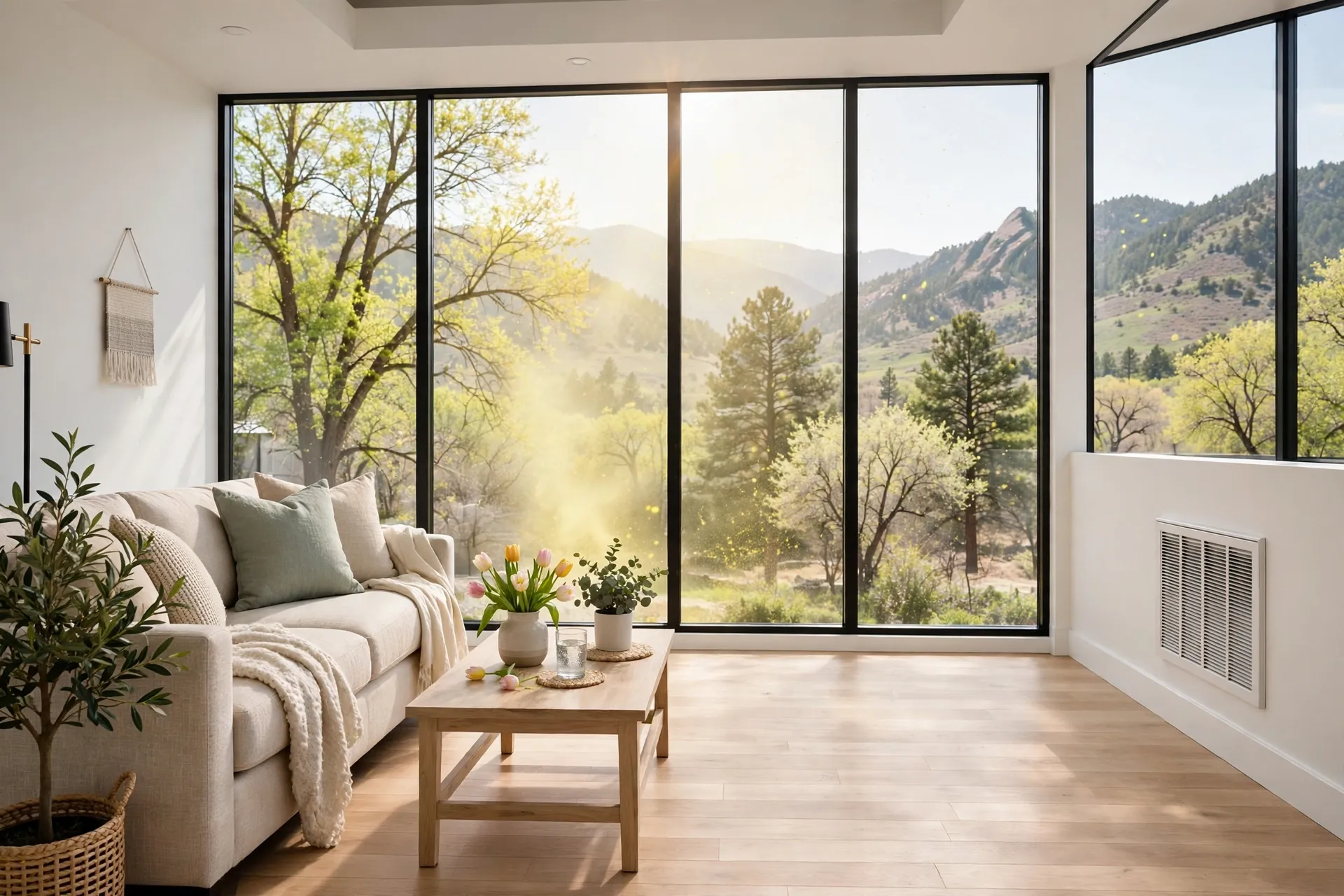
You know the Boulder version of spring. The cottonwoods along Boulder Creek puff out their seeds, the grass along the foothills turns green almost overnight, and the air takes on a yellow haze you can see from the Flatirons on a bright afternoon. It is beautiful, and if your nose runs and your eyes itch, it is also the start of a long few months.
Most allergy advice tells you to keep windows shut. That works until the house feels stuffy and the air goes stale, which is exactly what happens in a well sealed Boulder home. You need fresh air. You just do not need it carrying a load of pollen straight into the bedroom. That is the gap an ERV fills, and this blog walks through how it does it, which filters matter, and the settings that help most when pollen counts climb.
How Pollen Gets Inside a Boulder Home
Pollen does not wait for an invitation. It rides in on the breeze through an open window, slips through gaps around doors and vents, and hitches a ride on shoes, dogs, and jackets. In Boulder, the mix changes as the season moves on: tree pollen from cottonwood, juniper, and elm in spring, grass pollen through early summer, and ragweed and sagebrush later in the year. Each wave is small enough to float for miles on a Front Range wind.
Once pollen is inside, it settles on floors, bedding, and furniture, and every footstep or gust from a heating vent stirs it back up. A house with no steady ventilation holds onto it. Air comes in only when someone opens a door or a window, and it leaves the same random way. The result is a home that smells fresh for an hour after you air it out, then goes right back to feeling close and dusty. Those are familiar signs of poor ventilation in a Boulder home, and a steady exchange of filtered air breaks the cycle.
What an ERV Does Differently From an Open Window
An open window is all or nothing. It brings in air, pollen, dust, and noise together, and on a hot afternoon it brings in heat too. An ERV takes a steadier path. It pulls fresh air in through a filter, sends stale air out through the same core, and transfers heat and moisture between the two streams so the incoming air arrives closer to room temperature. You get a constant trickle of fresh air without the gusts and without throwing the windows wide.
The steady part matters as much as the filter. When air moves all day at a low rate, pollen that does get in gets diluted and carried out instead of building up. Bedrooms stay fresher overnight, cooking smells clear faster, and the house stops swinging between stuffy and drafty. If you are weighing the basics, start with our ERV installation guide for Boulder homes, which explains how the core and the duct runs work together.
Filters Do the Real Work: What to Choose
The ERV core moves the air. The filter decides what rides along. Most units ship with a basic filter that catches lint and large dust, which is fine for protecting the equipment but does little for pollen. For allergy season, the supply filter is the one to think about, because it sits on the incoming air stream and catches particles before they reach your rooms.
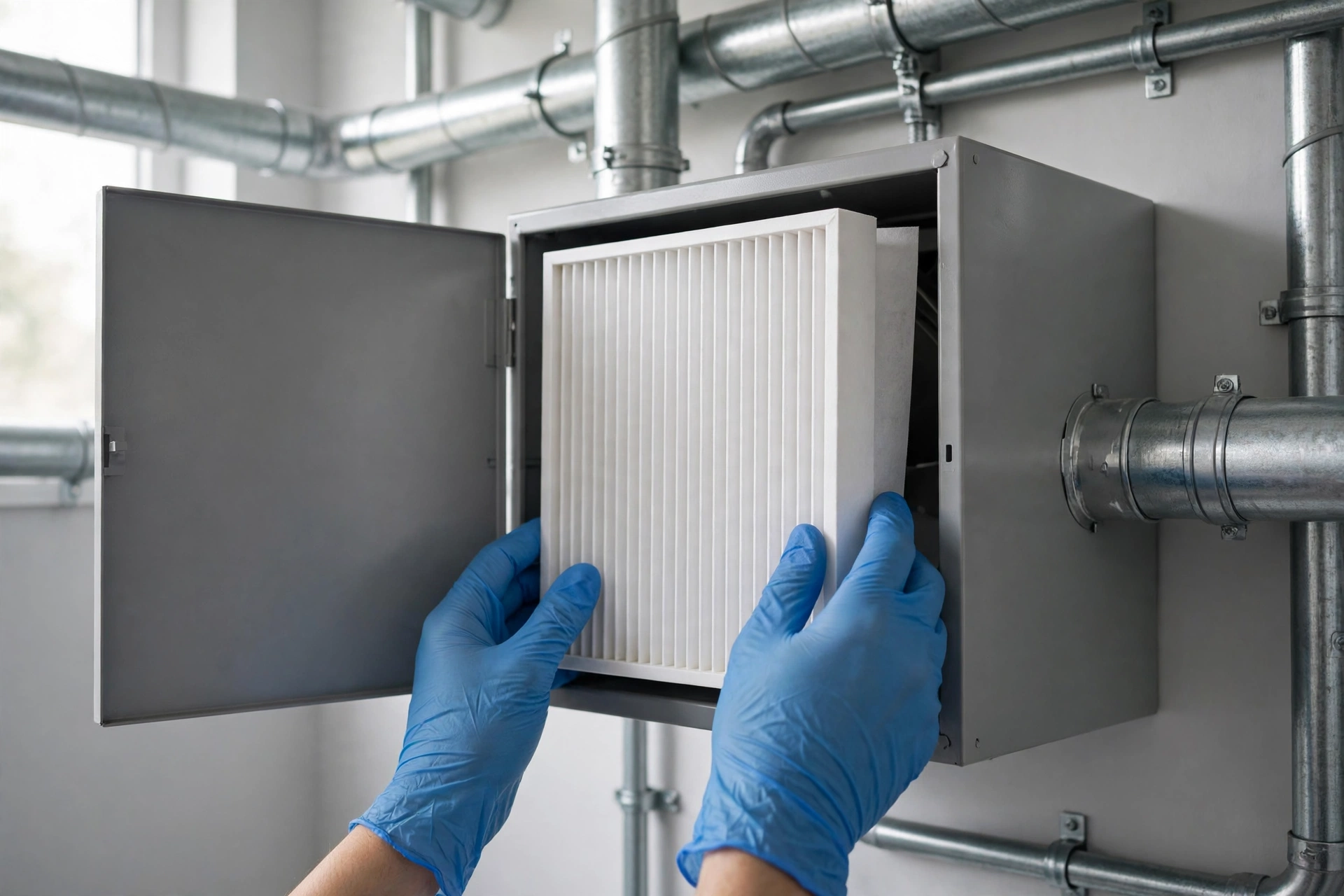
A finer filter catches more pollen and fine dust, but it also adds resistance, so the fan works harder and the airflow drops if the filter loads up. That is why the right choice is a balance, not simply the tightest filter on the shelf. Ask what filter grades your unit is rated for, how often each grade needs changing in a high pollen month, and whether the unit has a filter reminder or a pressure check. A filter that stays in too long stops helping and starts choking the airflow. Our guide to how often to change ERV filters covers the seasonal rhythm that works in Boulder.
One more detail people miss: the filter only helps if it fits snugly. A gap around the edges lets unfiltered air slip past, which defeats the point. When you swap a filter, check that it seats fully, that the access door closes tight, and that no air whistles around the frame. Five minutes of care here beats a finer filter installed carelessly.
Settings That Help During Allergy Season
Most ERVs offer a few fan speeds and a choice between continuous low speed and intermittent boosts. During pollen season, continuous low speed is usually the better call. It keeps a gentle flow of filtered air moving all day, which keeps indoor pollen levels down far better than running the unit hard for an hour and then switching it off.
- Run it steady, not in bursts. Low and continuous beats short blasts for keeping pollen diluted.
- Boost after dusty work. After vacuuming, mowing, or a weekend of open windows, run a higher speed for an hour or two to clear what got stirred up.
- Keep bedroom supply air steady at night. Pollen counts often peak in the morning, so a bedroom that has been ventilated all night wakes up fresher.
- Check the filter monthly in peak season. Tree pollen season can load a filter faster than the schedule on the box suggests.
If your unit has a humidity setting, leave it where it keeps indoor air comfortable rather than chasing a number. Boulder air is dry, and an ERV already recovers some moisture from outgoing air, which helps in spring when the heat still runs at night. And if wildfire smoke drifts in during late summer, the same habits help: keep the unit running, keep the filter fresh, and keep windows shut. See how an ERV handles wildfire smoke in Colorado for the smoke season version of this advice.
Pollen Season in Boulder Runs Longer Than Spring
People plan for April and May, then get surprised in June and again in September. Boulder sits where the plains meet the foothills, so the season stacks: juniper and elm early, cottonwood and ash in mid spring, grasses through June and July, and ragweed into the fall. A windy day in any of those windows can push counts up fast, and the dry air keeps particles floating longer than they would in a humid climate.
That long season is why a one month fix falls short. The homes that feel best through it are the ones with steady filtered ventilation from the first tree pollen wave to the last ragweed day, plus filters changed when they look loaded rather than on a fixed calendar date. Whether you are in a newer build in Table Mesa or an older ranch in Longmont, the pattern is the same: continuous filtered air, checked often, through the whole season.
Keeping the System Ready All Season
An ERV is a quiet machine, and quiet machines get forgotten. Before pollen season starts, open the unit, check the filters, wipe down the core if your model allows it, and make sure the outdoor intake hood is clear of leaves and cottonwood fluff. A blocked intake starves the whole system and makes the fan noisier for no benefit.
Midseason, peek at the supply filter once a month. If it looks grey and matted, change it even if the calendar says it has time left. At the end of the season, a quick check of the ducts and grilles keeps dust from sitting in the system over winter. If the unit sounds different, moves less air than it used to, or the house feels stuffy again despite a fresh filter, that is worth a look before the next wave arrives. A seasonal visit through ERV maintenance and tune ups or an indoor air quality assessment can catch a tired fan or a leaky duct run early. For homes still deciding on a system, residential ERV installation in Boulder lays out how the work fits around a finished home.
Related guide: ERV in Winter: Does It Work in Colorado's Cold?