Do Radiant Heat Homes in Boulder Still Need an ERV
Radiant floors feel wonderful underfoot on a cold Boulder morning. They do not bring fresh air into the house. Here is how ventilation works when there are no ducts to borrow.
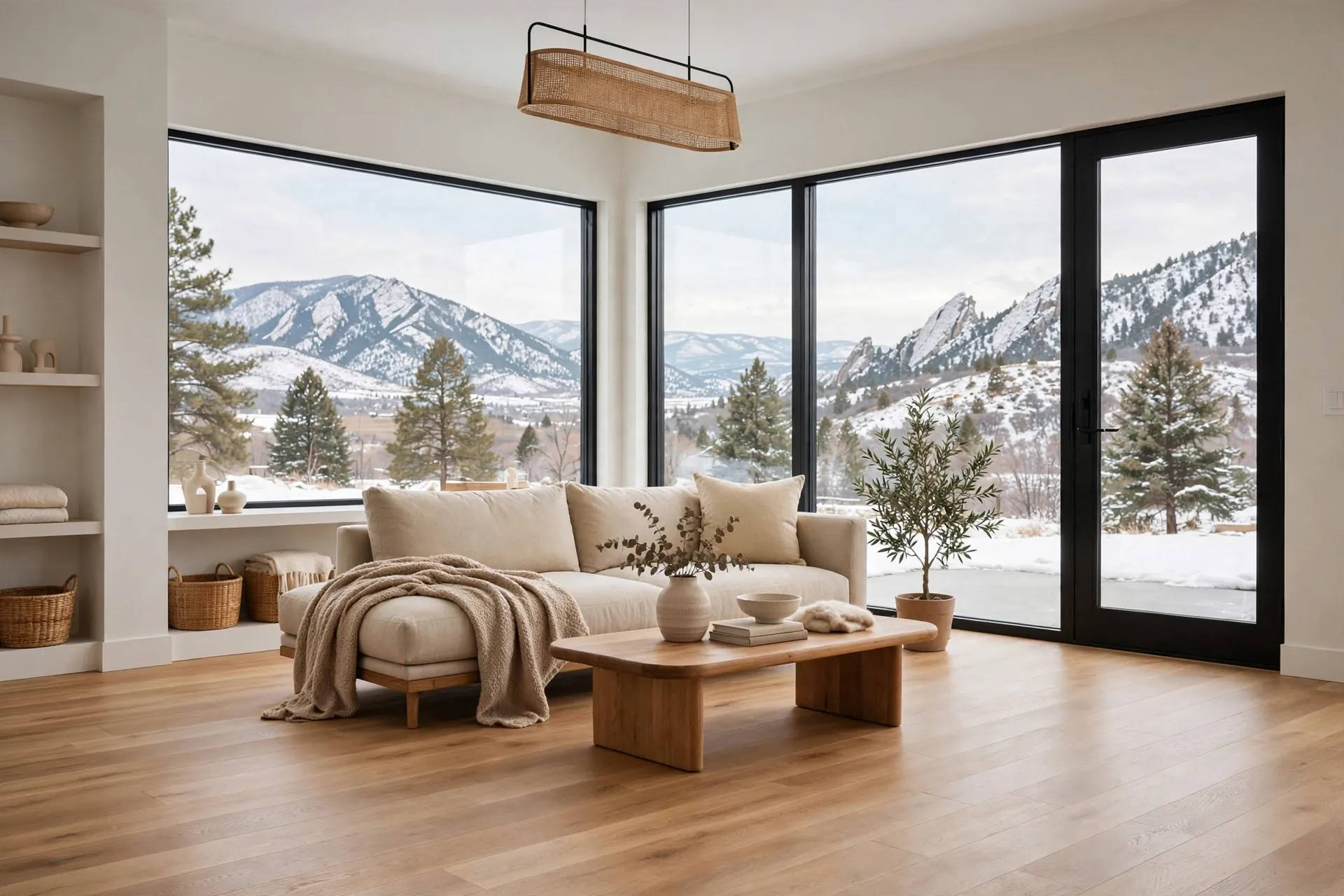
Walk barefoot across a radiant floor in January and you understand why Boulder homeowners love it. The warmth rises from the slab or the subfloor, steady and quiet, with no blast of hot air and no cold corners by the windows. That is the whole point. Radiant heat warms surfaces and the people standing on them, not a stream of air pushed through ducts.
That quiet is also the catch. A forced air furnace moves air every time it runs, pulling stale air back and pushing conditioned air out. A radiant home has none of that. The boiler warms water in pipes under the floor, and the air in each room mostly stays where it is. Cooking smells linger. Shower moisture hangs around. On a still winter day the house can feel close even though every room is warm. To see the mechanics, read how an ERV moves air through a home.
Radiant Heat Warms Floors, Not Air
Radiant heat warms the floor, and the floor warms the room by heating the objects and people in it. The air warms too, but gently, without being pushed anywhere. There is no blower, no return grille, and no filter catching dust as air cycles through. That is why radiant rooms feel so even, and why they can also feel still. The air you breathed an hour ago is largely the air you are breathing now, unless something moves it.
You see radiant floors all over Boulder: new builds in North Boulder, remodeled ranches in Martin Acres and Table Mesa, homes up toward Wonderland Lake where owners tore out old baseboards and started over. Some have a boiler and tubing in a slab, others have electric mats under bathroom or kitchen tile. The heat source differs, but the ventilation question is the same. In a forced air home, ventilation rides along with the heating ducts. A radiant home has to build that path from scratch, or skip ducts altogether.
Why a Tight Radiant Home Still Gets Stuffy
Older Boulder homes leaked. Air slipped in around windows, through attic hatches, and under doors, and that leakage acted as accidental ventilation. A remodeled radiant home is different. New windows, fresh insulation, and careful air sealing cut that leakage way down and leave the house with no reliable source of fresh air. The signs show up slowly: windows fog in the morning, the bedroom feels heavy when you wake up, and the kitchen still smells like dinner at lunch.
Opening windows is ventilation, but it is uncontrolled. It brings in smoke, pollen, dust, and cold air exactly when you least want them, and it does nothing on a calm day with no breeze. An ERV does the same job on purpose, bringing fresh air in and stale air out at the same time, and recovering heat from the outgoing air so the incoming air does not arrive cold. That matters here, because you chose radiant heat for steady comfort, and a ventilator that dumps cold air into the living room would undo it. See how residential ERV installation is planned room by room.
The Ductless Path: Room by Room Ventilation
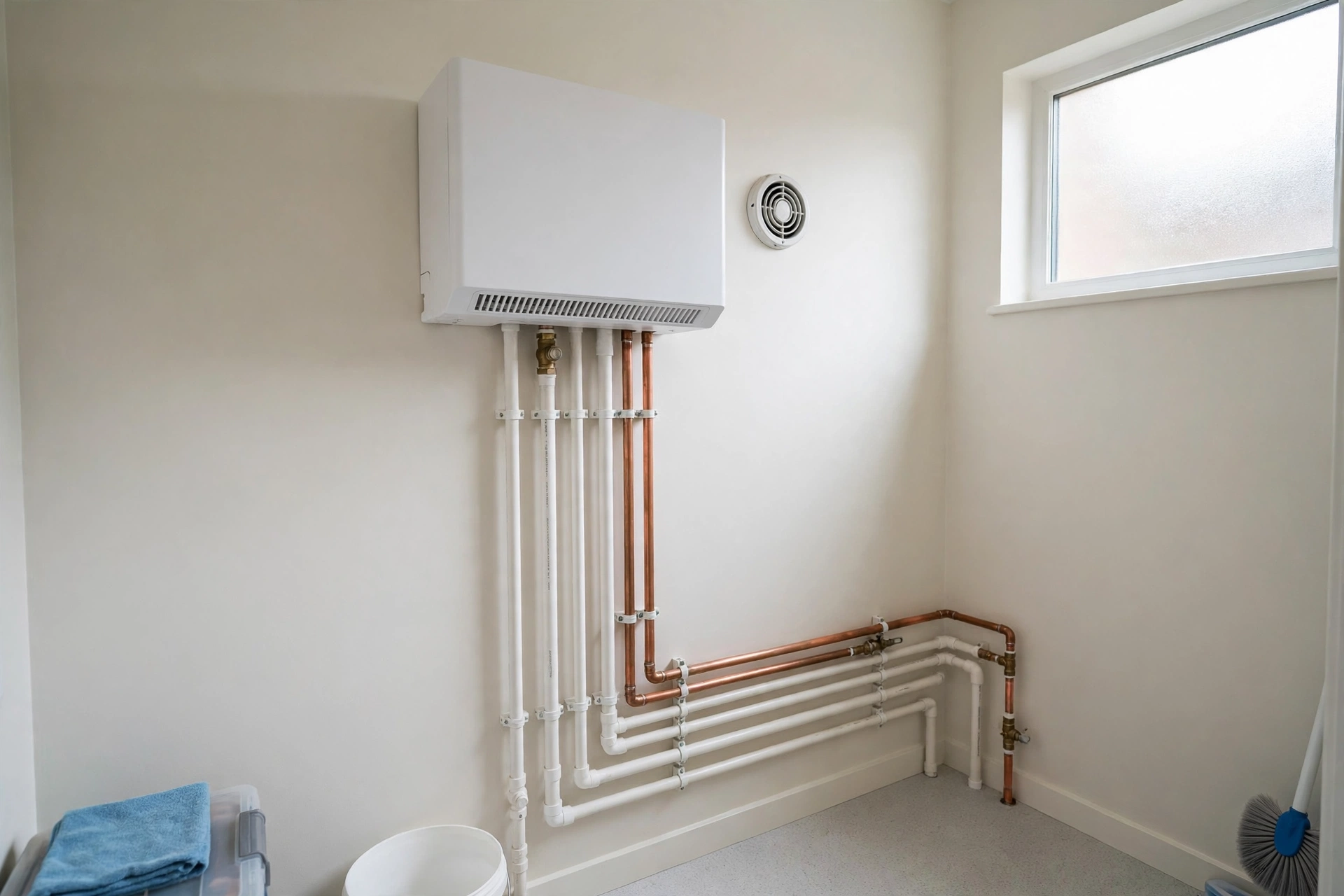
The simplest fit for a radiant home is a ductless, through wall unit. Think of it as a small ventilator that lives in one room and breathes through the outside wall. It pulls stale air out, brings fresh air in, and recovers heat in the unit itself. No ducts run through the attic. No chase gets cut through a finished ceiling. The work stays in that one room.
Ductless units make the most sense when one or two rooms are the problem: the bedroom that fogs up overnight, a basement room with no windows that open, a home office that smells stale by midafternoon. Each unit serves its own space, so you can start with the worst room and add another later. That room by room approach fits how radiant heat already works in zones.
There are limits. A through wall unit ventilates the room it sits in. It does not reach down a hallway and freshen a closed bedroom at the far end. A house with many closed rooms will need more than one unit to feel the difference throughout. Noise matters too. A small fan in the room you sleep in is a different thing from a fan tucked away in a utility room, so placement matters. An indoor air quality assessment can show which rooms are starved for fresh air before you pick walls and units.
The Standalone Path: One Unit, Its Own Small Ducts
The other path is a standalone ERV with its own ductwork. One unit, usually in a basement, garage, or utility closet, connects to small supply and exhaust runs that serve the whole house. The ducts belong to the ventilator alone. They do not connect to a furnace, and they do not carry heated air. They carry fresh air in and stale air out, room by room, from one central unit.
This fits best when the whole house feels stuffy, or when you are already opening walls for a remodel. The unit sits out of the way, so bedrooms stay quiet. Supply air goes to bedrooms and living spaces, exhaust air comes from kitchens, bathrooms, and laundry rooms. In a Boulder ranch with an open attic or unfinished basement, those runs often go in with less disruption than homeowners expect. Small ductwork made for ventilation can thread through joist bays and closets that a full furnace duct system never could.
The tradeoff is the install. Running ducts through a finished home means opening some drywall, patching, and painting, even when the runs are small. If you are remodeling a kitchen in South Boulder or finishing a basement in Gunbarrel, adding ductwork while the walls are open is the easy version of this job. Doing it later is still possible, and our guide to retrofitting an ERV into an older Boulder home walks through what that looks like. The radiant system stays untouched: the boiler heats the floors, and the ERV handles the air.
What Fits Which Boulder Home
Start with the house you actually have. A newer home in North Boulder with a tight envelope, a slab, and radiant throughout often suits a standalone unit, because the house needs steady whole house air exchange, and a utility room or garage wall usually holds the unit. An older ranch in Table Mesa that got radiant floors in a remodel, with a low attic and finished ceilings, may suit ductless units in the bedrooms first, with the rest added later if needed.
Layout and climate decide the rest. Open plan spaces share air easily, so one or two well placed units can cover a lot of ground. A home with many small bedrooms, a finished basement, and doors that stay shut needs a plan that reaches each closed room, and that usually points toward a central unit. Basements deserve their own thought, since below grade rooms trap moisture and stale air that a radiant slab does not fix. And Boulder winters are long and dry, with wildfire smoke shaping late summer, so ask how any unit handles a cold snap and smoke season. Read how an ERV handles a Boulder winter.
How to Decide Before You Call
You can narrow this down in an evening without any tools. Walk the house on a cold morning and note which rooms feel stuffy, which windows fog, and which rooms smell like yesterday. Open the bedroom door at night for a week and see if sleep feels different. That tells you whether the problem is one room or the whole house, which steers the choice between ductless and standalone.
Then look at the bones. Is there a basement, attic, or utility room where a central unit could sit? Are the ceilings finished, or is there open framing to work with? Where are the outside walls in the rooms that need help? Bring those notes to the conversation. Radiant heat gave you warm, quiet floors. The right ventilation gives you air to match, fresh without cold drafts. Learn what residential ERV installation in Boulder looks like for a home with no ductwork to borrow.
Related guide: Retrofitting an ERV Into an Older Boulder Home: What to Expect