Whole House Fans vs ERV: Which Fits a Boulder Home
One pulls in cool evening air for a few hours. The other quietly swaps stale air for fresh air all year. Here is how to tell which one your Boulder home actually needs.
Walk into a Boulder home on a hot August evening and you will often hear the same debate. One neighbor swears by the whole house fan in the attic. Another says the ERV running quietly in the basement changed everything. Both of them are right about their own house, and both would be wrong in the other's. A fan and an ERV both move air, but they do completely different jobs, and Boulder's climate makes the difference between them sharper than in most places.
The confusion is understandable. Both systems promise fresher air and a more comfortable home. Both involve fans, ductwork, and a controller on the wall. But one is a cooling tool that works a few hours a day in summer, and the other is a ventilation system that works around the clock in every season. It helps to know what each one actually does.
What a Whole House Fan Actually Does
A whole house fan is a big, powerful fan mounted in the ceiling, usually in the hallway or at the top of the stairs, that pulls air out of the living space and pushes it into the attic. When you open a few windows and switch it on, cool evening air rushes in through the windows, sweeps through the house, and exits through the attic vents. On a summer evening in Boulder, when the temperature drops fast after sunset, that rush of cool air can drop the indoor temperature several degrees in under an hour.
It is simple, and that is the appeal. No ductwork to every room. No filters to change. You open windows, flip a switch, and the house breathes. The fan only runs when you run it, and in Boulder that usually means summer evenings, maybe an hour or two a day for a few months of the year. The rest of the time it sits idle, and your home's air does whatever it was doing before.
The limits matter as much as the benefits. A whole house fan only works when the outdoor air is cooler than the indoor air and clean enough to bring inside. It does nothing in January. It does nothing on a smoky August afternoon. And because it pulls a strong negative pressure on the house while it runs, it can backdraft a water heater or fireplace if the windows are not open wide enough. Used right, it is a wonderful cooling helper, not a ventilation system.
What an ERV Does Differently
An ERV, or energy recovery ventilator, runs continuously at low speed, all year. It pulls stale air out of kitchens, bathrooms, and bedrooms while pulling fresh air in, and the two airstreams pass through a core that transfers heat and moisture between them. In winter, heat from the outgoing air warms the incoming air. In summer, the core works the other way, taking some of the heat and humidity out of incoming air before it reaches your rooms.
That steady exchange is the whole point. A Boulder home built in the last twenty years is tight. Windows stay shut for months, and the air inside collects everything a family produces: cooking moisture, cleaning chemicals, carbon dioxide, dust, and in many parts of Boulder County, radon rising from the soil. An ERV installed for the whole house replaces that air bit by bit, all day, without the energy penalty of leaving a window open in January. Our guide on how ERVs help with radon in Boulder County homes explains the dilution effect in more detail.
The ERV also filters the air it brings in. That matters more every summer in Colorado, and it is the sharpest difference between the two systems, which we will get to in a moment.
Boulder's Climate Changes the Math
Boulder is a strange place to cool a house. Summer days hit the nineties, then the temperature falls twenty degrees or more after sunset. That big daily swing is a whole house fan's best friend. Open the windows at eight in the evening, run the fan for an hour, and the house feels like a different place. Homes in Table Mesa and South Boulder with good cross breezes get the most out of it, because the fan has somewhere to pull air from and somewhere to send it.
But the swing cuts both ways. Winter in Boulder is long, dry, and cold, and a fan does nothing for the five or six months when the windows stay shut. That is when indoor air gets stale, humidity drops, and the house feels sealed up. An ERV earns its keep in those months, quietly swapping air while recovering heat, so the house stays fresh without the heating system working overtime. If your complaint is summer heat, a fan answers it. If your complaint is stale air, headaches, or condensation on the windows in February, only the ERV does.
Wildfire Smoke Draws a Hard Line
Every summer now, Boulder gets days when the sky turns orange and the air smells like a campfire. On those days, a whole house fan is worse than useless. It is a machine designed to pull large volumes of outdoor air into your living space, which is the last thing you want when the outdoor air is full of smoke. The standard advice is blunt: keep the fan off and the windows shut until the smoke clears.
An ERV handles smoke season the opposite way. It keeps ventilating, but the incoming air passes through filters, and with the right filter setup it brings in fresh air while catching much of the fine particulate. It is not a perfect shield, but it keeps air moving without opening a window to the haze. Our post on whether an ERV helps with wildfire smoke in Colorado walks through filter choices and realistic expectations.
A cooling fan is lovely on the clear evenings of summer. An ERV keeps working on the smoky ones, and on every cold, still day of winter too.
What Each One Uses and Needs From Your House
A whole house fan uses about as much electricity as a few light bulbs while it is on, and it needs an attic with enough vent area to let the air out, plus windows you can open. The catch is the house itself. Older Boulder homes with leaky attics or blocked soffit vents sometimes need vent work before a big fan can do its job, and the fan needs a clear path for air to move through the house.
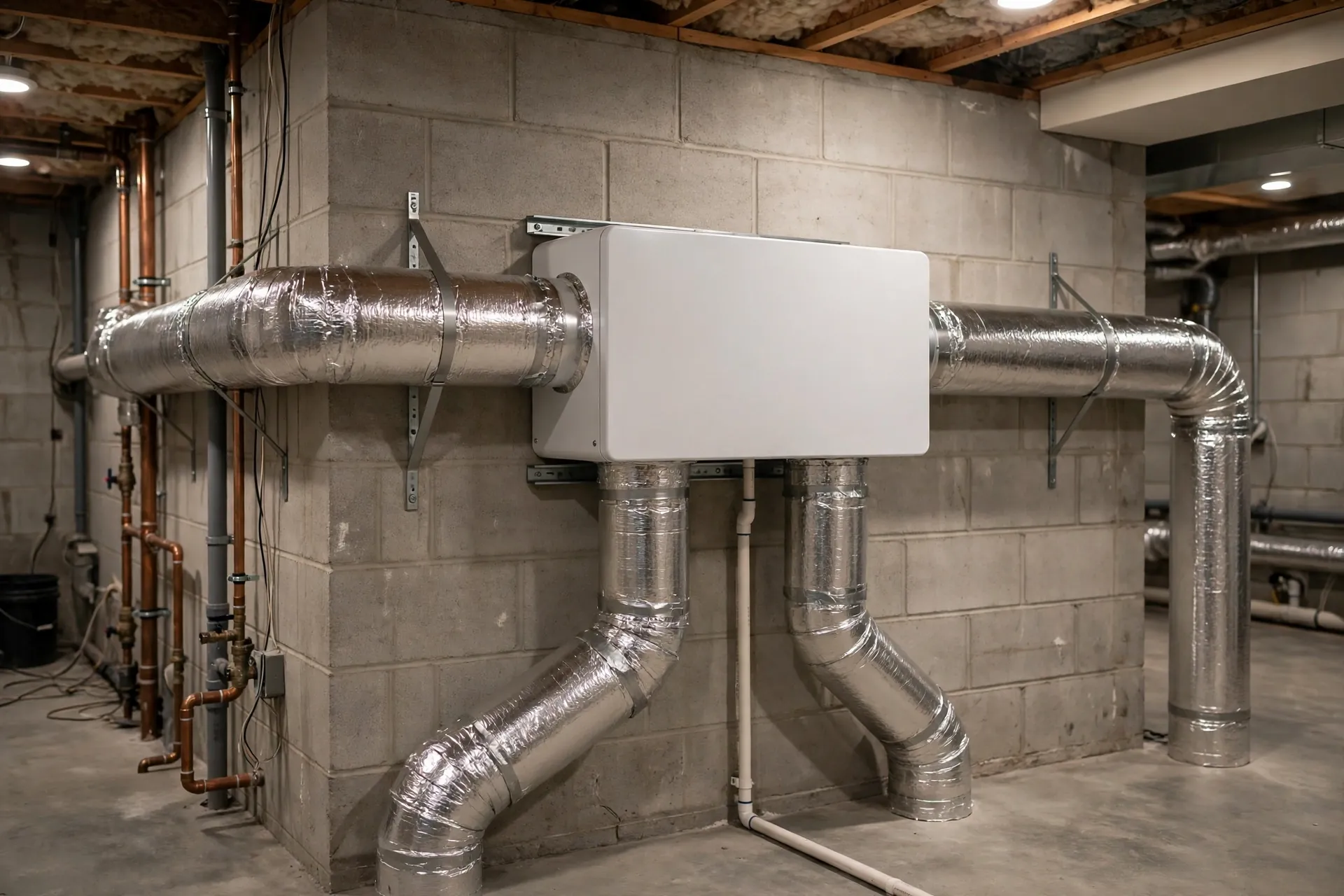
An ERV is a bigger project up front, because it is a real system: a unit, ductwork to supply and exhaust points in several rooms, and controls. It also needs care, filters changed on schedule and the core cleaned, which is where our ERV maintenance and tune-up visits come in. What it gives back is year-round service. It runs at low speed all day, every day, using little power, and it protects the rest of your home in ways a fan never will: steadier humidity, fewer condensation problems, and air that stays fresh in every season. Sizing matters, and our ERV sizing guide explains how capacity gets matched to a house, which is why proper airflow balancing and commissioning matters on every install.
Think of it as the difference between a window fan and a furnace. One is a helper you switch on when conditions are right. The other is part of the house.
Which One Fits Your Boulder Home
Start with the complaint. If your house overheats on summer evenings and cools off nicely once the sun drops, a whole house fan will probably make you happy, especially if you live in a neighborhood like Gunbarrel or Louisville where evening breezes run cool. If your house feels stuffy in winter, the windows fog up, or someone in the family gets headaches after a long day working from home, a fan will not touch the problem. That is an ERV problem, and our guide to the signs your home needs better ventilation can help you check.
Plenty of Boulder homes end up with both, and that is not a contradiction. The ERV runs all year as the ventilation backbone, and the fan runs on summer evenings as the cooling boost. The two systems do not fight each other. If you can only pick one, pick the system that solves the problem you live with most days of the year. In Boulder, for most families, that is the ERV.
Still not sure? Walk through your house on a January evening and a July evening and notice which one bothers you more. A residential ERV installation is a decision you live with for decades, so it deserves a straight answer, not a sales pitch.
Related guide: ERV vs HRV: Which One Does Your Boulder Home Actually Need?